
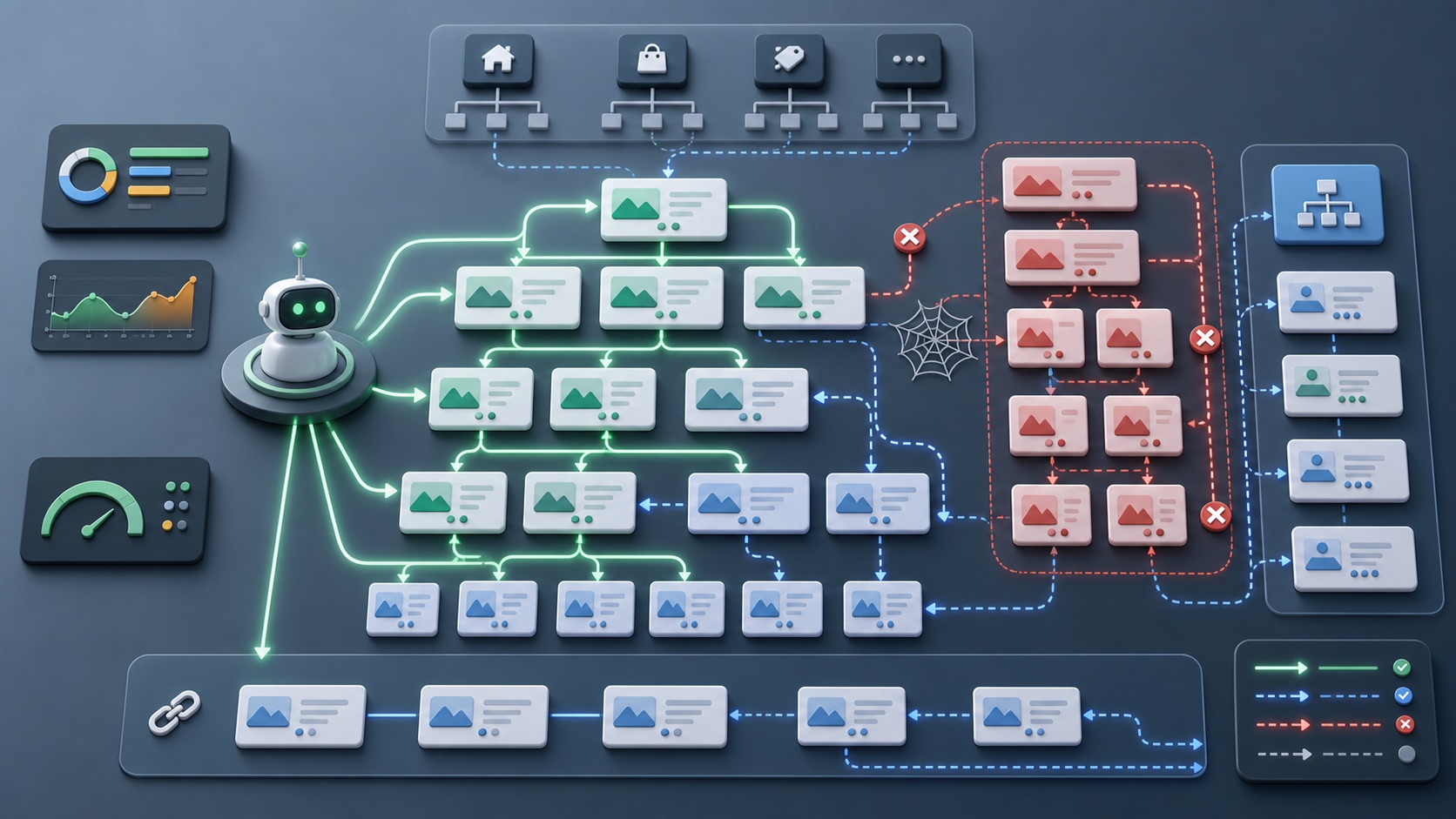
 AI-generated illustration
Optimize Crawl Budget: What Really Counts on Big WebsitesCleanly prioritize crawl traps, internal links and indexing control
Optimize crawl budget for large websites: use parameters, filters, internal links, status codes, sitemaps and logfiles correctly.
Crawl budget optimization is above all prioritization: search engines should easily find important, indexable and up-to-date pages.
Classification and SEO relevance
The article ranks when crawl budget is a problem at all and which measures have the biggest leverage on large websites.
Small websites rarely have real crawl budget problems. For shops, portals, forums, archives and international websites, parameters, filters, pagination, forwarding chains and weak internal links can ensure that important pages are crawled sparely or rarely.
Control case: sorting parameters dominate bot accesses
Server logs show many retrievals of lists with changing sorting parameters. Group by URL pattern and verified bot, instead of just looking at the total number of requests. Check which combinations are generated internally and whether they offer independent content.
After an adjustment, compare the same time period and the viewing shares of important content. Fewer requests are not an end in themselves: New or changed landing pages must still be accessible and linked meaningfully.
Recommended approach
- Check if there are real crawl budget signs: many URLs, logfile patterns, indexing delays.
- Clean up status codes, redirect chains, and non-canonical sitemaps.
- Control parameters, filters and internal search consciously.
- Strengthen important pages with navigation, breadcrumbs, hubs and contextual links.
- Observe crawl frequency, indexing and visibility by action.
Typical errors
- Constituting Crawl Budget as Every Small Website's Problem
- robots.txt, although noindex, Canonical or Redirect would be the better solution
- Allow filter pages to be indexed uncontrollably
- Fuel sitemaps with non-canonical or faulty URLs
- Hide important pages too deep in the link structure
Practice checklist
- Are important URLs in Sitemaps canonical and accessible?
- Are there masses of parameter or filter URLs?
- Do bots frequently meet 404, 410 or redirect chains?
- Are prioritized pages reachable within a few clicks?
- Is it clear which areas are to be indexed and which are not?
- Are Logfiles and Search Console evaluated together?
How to identify improvements
- Bot searches per directory
- Indexing rate of important URLs
- Percentage of incorrect bot responses
- Internal link depth
- Visibility of Prioritized Page Types
Related Articles and Next Meaningful Steps
Frequent questions
Does Every Website Have Crawl Budget Problems?
No. It usually only becomes relevant for very many URLs, technical duplicates or large dynamic areas.
Should you block unimportant pages by robots.txt?
Only if blocking is really the goal. For indexing control, noindex, canonical or redirect are often more appropriate.
What is the fastest leverage?
Erroneous URLs, forwarding chains, incorrect sitemaps and uncontrolled parameter ranges often deliver quick profits.
Conclusion
Crawl budget work begins with proven unnecessary URL generation. For small, easily crawled websites, better content and clean internal links are often more urgent than having your own budget strategy.