
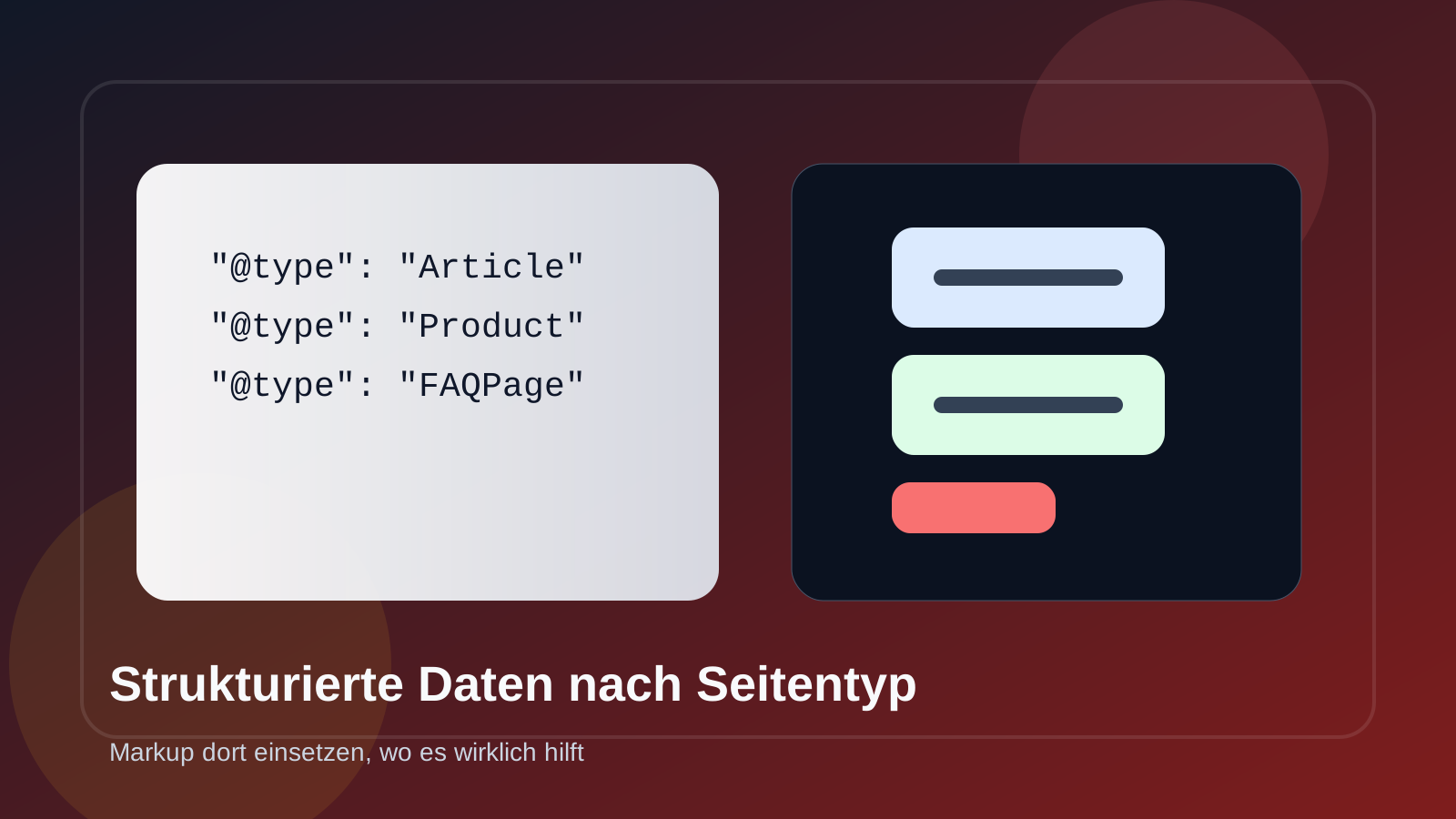
 AI-generated illustration
Structured data by page type: what is really worthwhile for articles, products, FAQs and companiesSchema markup works best if it is pragmatically prioritized and implemented correctly
The appropriate schema type follows the actually described entity. A product page, a specialist article and a company page therefore require different information and tests.
Not to combine as many types as possible, but to consistently and up-to-date the central statements of a page type.
Bringing together page type and data requirements
| Page | Possible entity | Special alignment |
|---|---|---|
| Product detail | Product and suitable offer data | Visible price, currency, availability, product identity |
| Editorial contribution | Article or suitable subtype | Title, Author, Release and Amendment Date |
| Corporate presentation | Organization or appropriate local type | Real name, URL and relevant contact/location data |
| Navigation pathway | BreadcrumbList | Visible Order and Actual Link Targets |
A product variant as a control case
Illustrative example: The visible red variant costs differently than the main product, but the JSON-LD still calls an outdated standard price. The syntax test can still be successful. The decisive factor is whether the data object correctly reflects the actually described product and offer context.
Therefore, do not just check any article. Variants, promotional prices, unavailable products and voice/currency views are meaningful counter-rehearsals for a shop template.
Secure the output per template
- Set the actual main entity and data source per page type.
- Select a normal and an incomplete data set.
- Test special characters, empty optional fields and changed values.
- Recognize double edition from theme and extensions.
- Control schema validation and requests of the desired search representation separately.
No universal rich result template
An FAQ section is not automatically a promise of a special search presentation. Similarly, an organization type is not sufficient to present each company page as a local offer in any location.
Use the current documentation of the desired search function for required and recommended information. Changes to these requirements should be reviewed on the template, rather than just reworking individual published pages.
Frequent questions
Can a page contain multiple entities?
Yes, if the relationships and statements are meaningful. For example, an article can name an author and a publishing organization.
Which Exam Is More Important: Scheme or Google Test?
They answer different questions. Syntax and schema model check the data structure; the Google test refers to supported search functions.