
 AI-generated illustration
Using Breadcrumbs correctly: better orientation for users and search enginesProperly used breadcrumbs make complex websites more understandable and robust
Breadcrumbs show where a page lies within a traceable content structure. They should help visitors to reach a suitable higher-level selection, instead of just rebuilding the technical URL path.
Visible path, actual links and structured data must describe the same meaningful hierarchy.
Creating a hierarchy of content
For a backpack, “Home › Hiking › Backpacks › Model A” can be a helpful orientation. A technical path with IDs and routing components is not automatically the right template for this.
If a product is assigned to several categories, it needs a conscious decision for the displayed context. A randomly changing path can confuse visitors and create conflicting information in the structured data.
A simple visible path
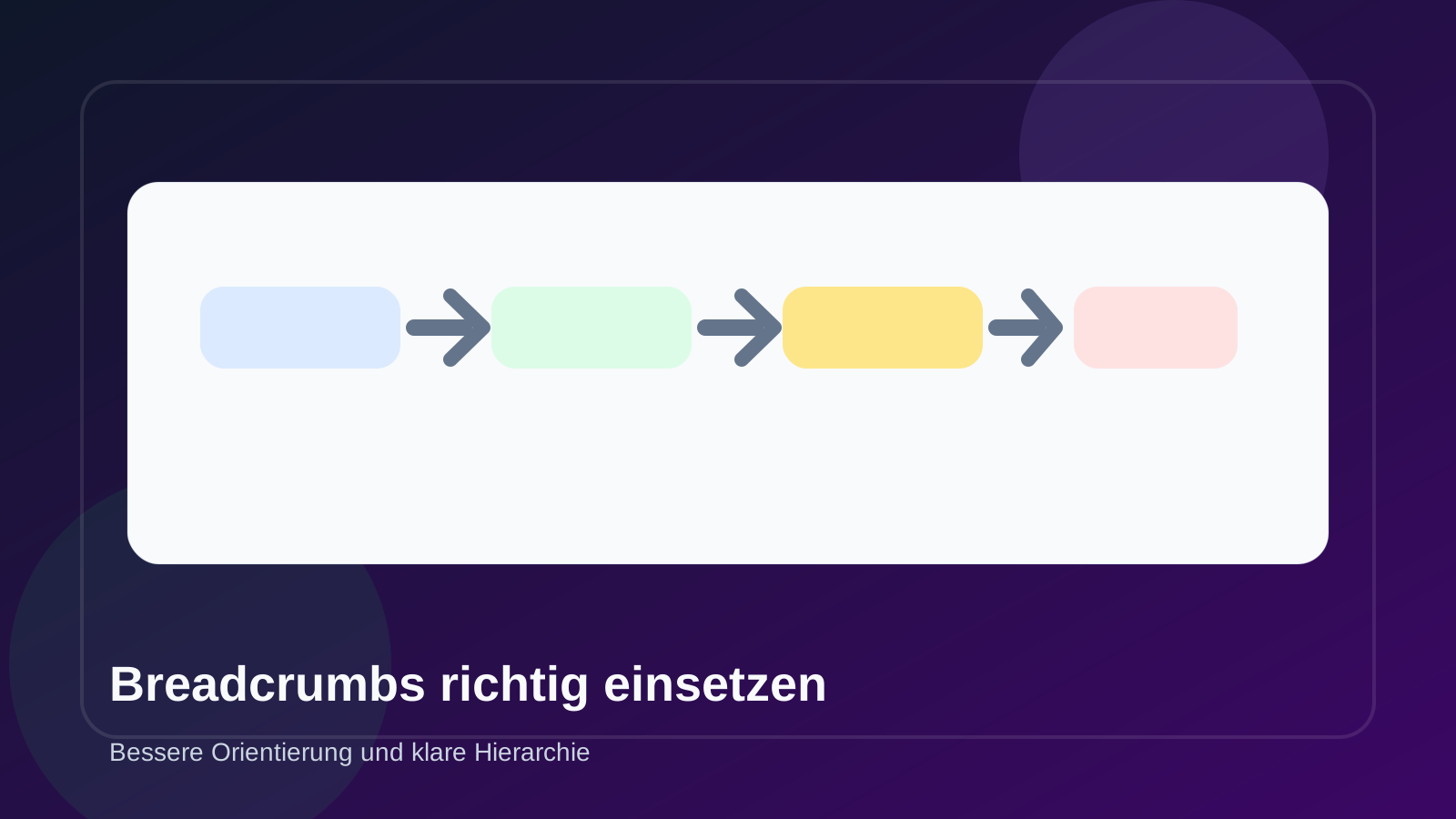
The example shows the visible navigation. If additional BreadcrumbList markup is output, the order, names and destination addresses must match this content. Decorative separators are not separate hierarchical levels.
<nav aria-label="Breadcrumb">
  <a href="/">Startseite</a> ›
  <a href="/wandern/">Wandern</a> ›
  <a href="/wandern/rucksaecke/">Rucksäcke</a> ›
  <span aria-current="page">Modell A</span>
</nav>
Testing Breadcrumbs
- Determine a clear overarching page for the respective content.
- Check all linked levels for status and content fit.
- Test desktop and mobile view for readability and operation.
- Compare visible path with structured data, if any.
- Check the same examples again after category or slug changes.
When a long chain is not necessary
A very flat website can do with a short orientation. Additional artificial intermediate stages do not help if they offer neither a meaningful overview nor a relevant selection.
Breadcrumbs also do not replace context links. A related guide or complementary product can be helpful, although it is not within the same hierarchical parent chain.
Frequent questions
Does the breadcrumb have to correspond exactly to the URL?
No. It should represent the comprehensible content structure. Technical routing components are not necessarily meaningful navigation levels.
Does BreadcrumbList guarantee a specific Google presentation?
No. Correct and appropriate structured data can support the interpretation; the specific display decides the search engine.