
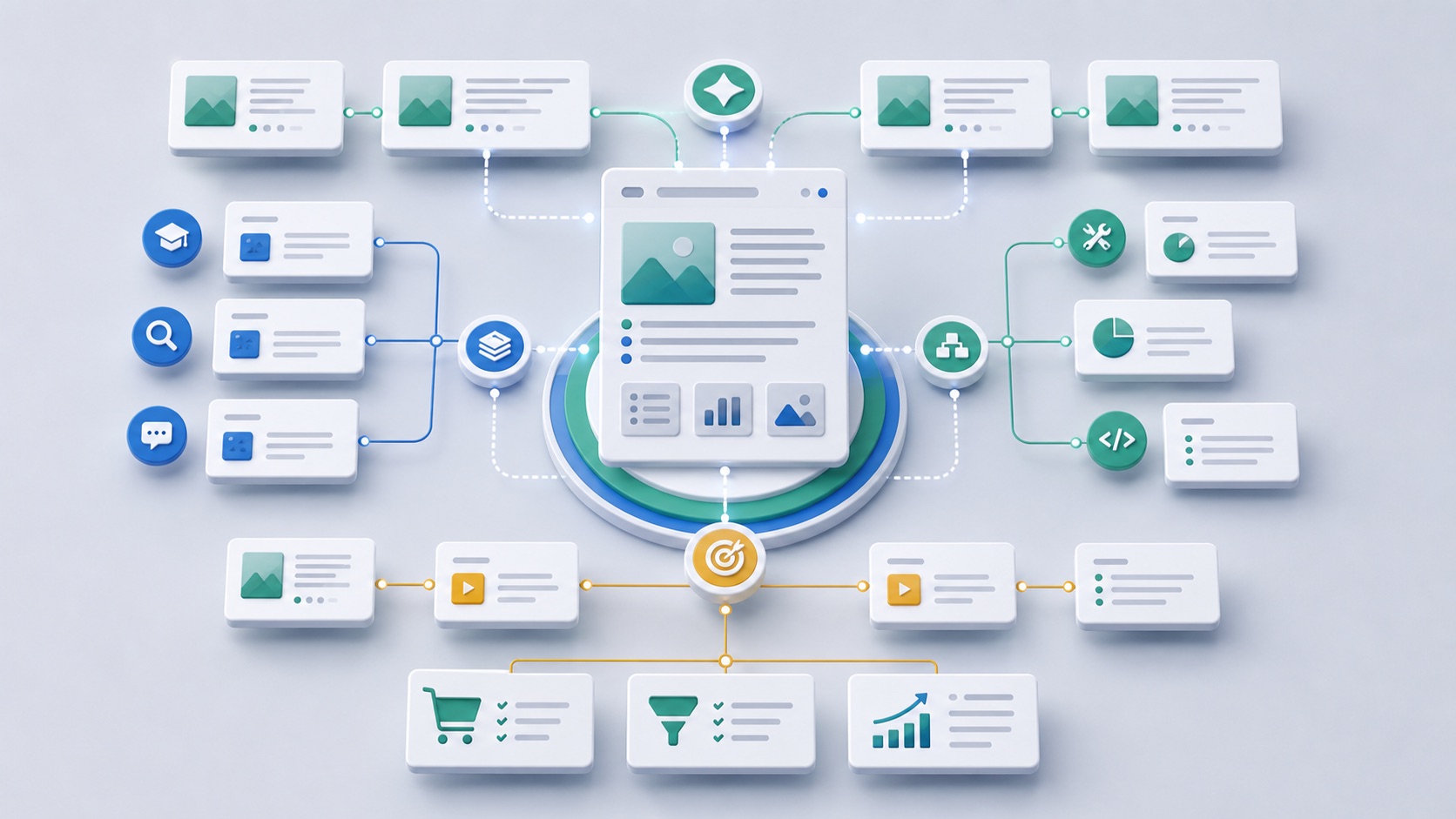
 AI-generated illustration
Content hubs for thematic authority: from individual articles to SEO systemHow Pillar Pages, Expert Articles and Internal Links Strengthen Rankings Together
Planning content hubs for SEO: topic architecture, Pillar pages, internal links, search intentions, updates and success measurement explained in a practical manner.
A content hub builds expertise on a topic, prioritizes search intentions and guides users from basics to decision-making and implementation.
Classification and SEO relevance
The article is aimed at teams that have many individual articles, but want to build a clear SEO system with topic focus and internal linking.
Individual articles often rank in the short term. Long-term authority arises when content covers a topic completely, understandably and interconnectedly. Search systems and users then recognize faster which side has which role.
Control case: The hub does not link to the actual answer
A website relaunch hub lists general SEO articles, but no redirect map and no acceptance checklist. First, arrange the tasks before, during and after the relaunch. Link the appropriate deepening with a description of its benefits.
Then check the opposite direction: A detailed page should make the next meaningful step and the thematic overview achievable. More links alone do not create an understandable order.
Recommended approach
- Collect search intentions and rank them by knowledge, comparison, implementation and decision.
- Define a hub page that provides guidance but doesn’t take over every detail question.
- Create or consolidate specialist articles for recurring subquestions.
- Consciously set internal links from basics to deepening, tool and service.
- Maintain the hub on a quarterly basis with Search Console data, new questions, and outdated content.
Typical errors
- Building Pillar Pages as Endless Collectibles Without a Clear Task
- Optimize all sub-articles with the same keyword
- Set internal links only automatically or alphabetically
- Separate conversion pages from the guide area
- Hubs never update even though search intentions change
Practice checklist
- Does each page in the hub have its own search intention?
- Are Pillar pages, detailed articles and conversion pages clearly separated?
- Lead links in both directions: from the hub into details and back?
- Is there a priority for the most important pages?
- Are outdated articles brought together or updated?
- Is the hub ranked by rankings, clicks and leads?
How to identify improvements
- Visibility of the entire thematic cluster
- organic entry points on hub and detail pages
- internal click paths from guide to offer
- Number of ranking longtail queers
- Leads or tool use from hub traffic
Related Articles and Next Meaningful Steps
Frequent questions
How many articles does a content hub need?
As many as real search intentions exist. Quality and clear roles are more important than a fixed number of articles.
Should the Pillar page contain all the details?
No. It should provide orientation and lead specifically to detailed pages, so that users do not get stuck in a long collective text.
How often should a hub be updated?
At least quarterly or whenever Search Console data reveals new questions, cannibalization or outdated statements.
Conclusion
A content hub wins through complete task coverage and clear paths. New detailed pages are worthwhile if an independent question remains open – not to reach any number of articles.